
e-CRAFTS Reaches a Key Milestone: Our Platform Is Ready, and the Pilot Phase Confirms Its Impact
Updated: Jul 23
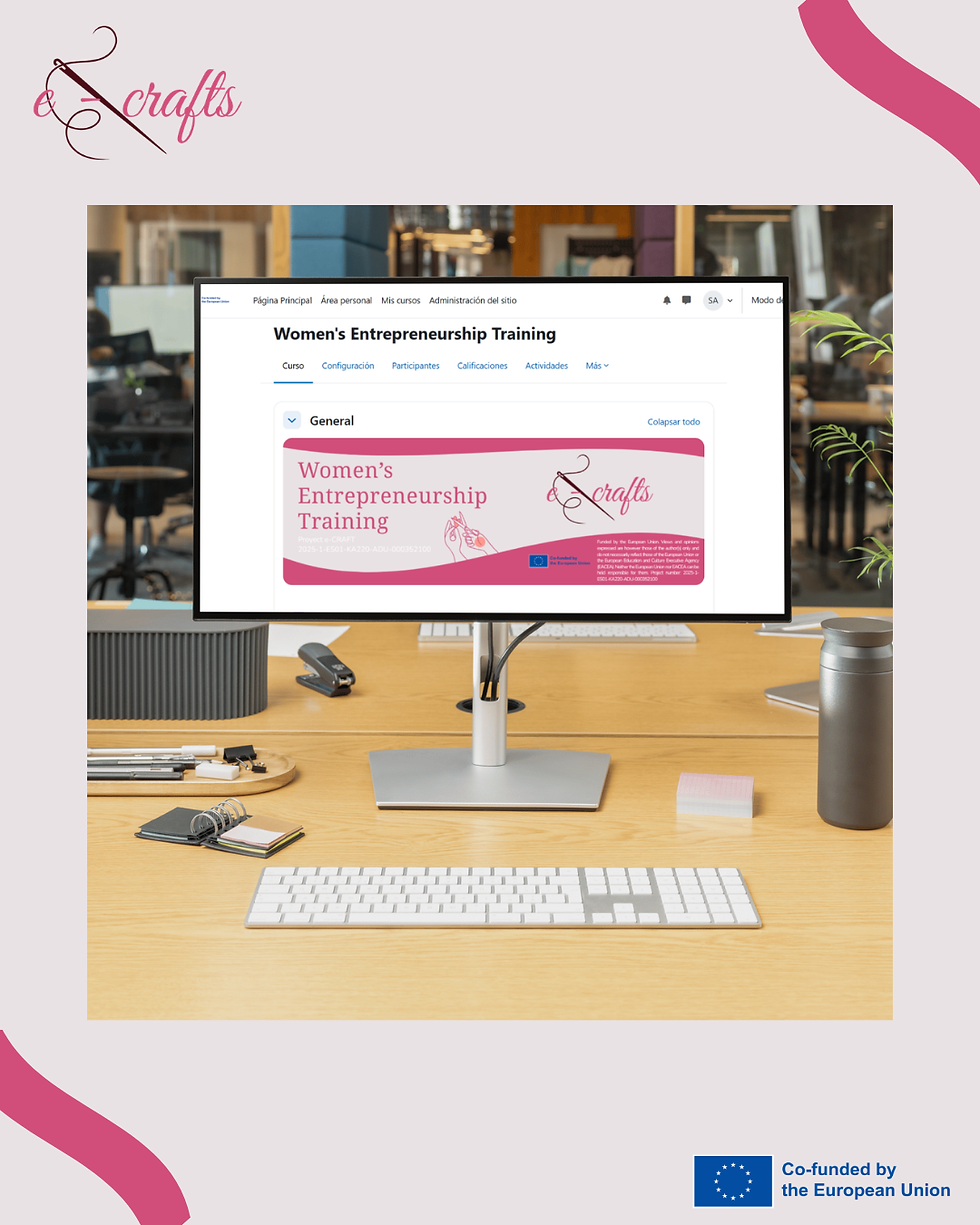
The e-CRAFTS project has entered one of its most exciting stages. After months of coordinated work among partners from Spain, Malta, the Netherlands, Türkiye, Cyprus, Italy, and Greece, the digital platform designed to support women artisans at risk of social exclusion is now fully developed. Even more importantly, the pilot phase, carried out with real participants across Europe, has validated both the quality and the potential of this innovative learning environment.
From the beginning, e-CRAFTS set out to address a clear need: many women who work in traditional crafts face barriers when trying to enter the digital market. Limited access to training, lack of confidence with technology, and social or economic vulnerability often
prevent them from transforming their skills into sustainable income. The platform was created precisely to respond to these challenges, offering accessible training in entrepreneurship, digital literacy, and e-commerce through a user-friendly and inclusive online environment.
The development process has been deeply collaborative. Each partner contributed expertise in adult education, digital innovation, social inclusion, and entrepreneurship. This collective effort resulted in a platform that combines interactive modules, practical exercises, self-assessment tools, and real stories from women artisans who are already navigating the digital world. The goal was not only to teach technical skills but also to inspire confidence, creativity, and a sense of community.
Once the platform was ready, the consortium launched a pilot phase to test its usability and relevance with real participants. Women from all partner countries engaged with the modules, explored the resources, and provided detailed feedback on their experience. Their insights were invaluable. Many highlighted how clear and approachable the content felt, even for those with limited digital experience. Others appreciated the practical focus of the exercises, which helped them visualize how e-commerce could support their craft businesses. Several participants expressed that the platform motivated them to take their first steps toward digital entrepreneurship, an impact that aligns perfectly with the project’s mission.
The pilot also revealed areas for improvement, which the consortium is already addressing. Navigation is being refined to make the learning journey even smoother. Videos and downloadable materials are being updated to enhance clarity and accessibility. Additional self-assessment tools are being integrated to help learners track their progress more effectively. These adjustments ensure that the final version of the platform will be polished, intuitive, and fully aligned with the needs of the women it aims to support.
What stands out most at this stage is the project’s early impact. Even before the official launch, e-CRAFTS is already opening doors for women who had never considered digital entrepreneurship as a viable path. The platform is helping them discover new opportunities, connect with other artisans, and understand how digital tools can amplify their work. It is creating a space where creativity, tradition, and technology come together to build economic autonomy and social inclusion.
As we move toward the official launch, the consortium is preparing national workshops, mentoring sessions, and dissemination activities that will bring the platform to even more women across Europe. The next phase will focus on expanding access, strengthening local networks, and ensuring that the project’s benefits continue long after its completion.
e-CRAFTS is more than a digital platform. It is a commitment to inclusion, empowerment, and the future of artisanal work in a digital world. And with the pilot phase successfully completed, that future feels closer than ever.


Comments