
From ideas to impact: the E-CRAFTS journey moves towards its pilot phase
Updated: Jul 23
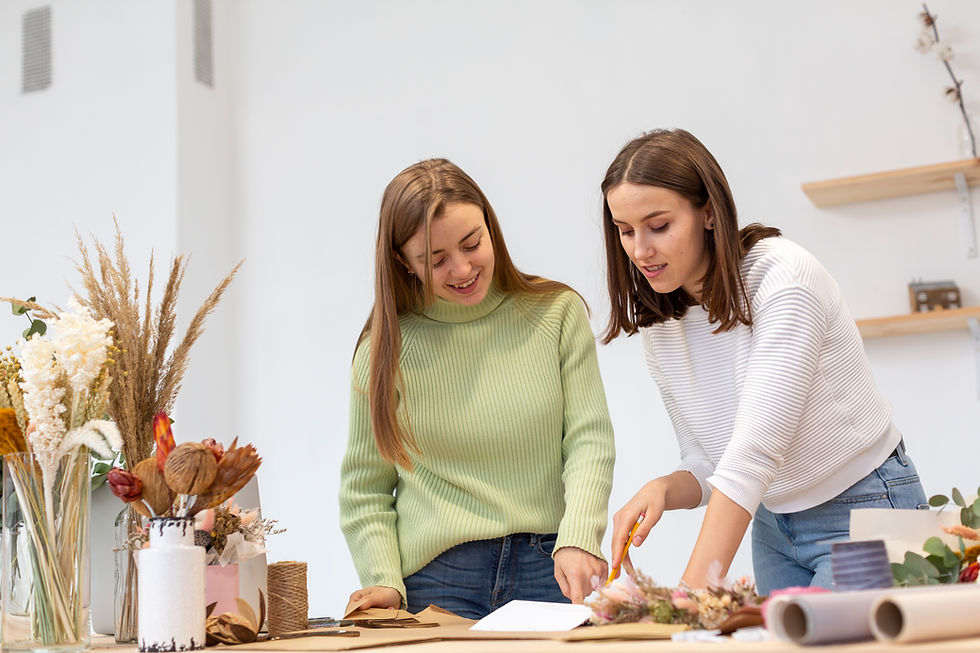
Across Europe, many women create beautiful handmade products: textiles, jewellery, ceramics, and more. These crafts often carry stories, traditions, and cultural heritage passed down through generations. Yet, despite their creativity and skills, many women face challenges when it comes to turning their work into sustainable income.
Limited access to digital tools, lack of visibility, and barriers to entering online markets often keep their businesses small and local. In a world where digital presence is increasingly essential, this gap can limit opportunities.
This is exactly where the E-CRAFTS project comes in.
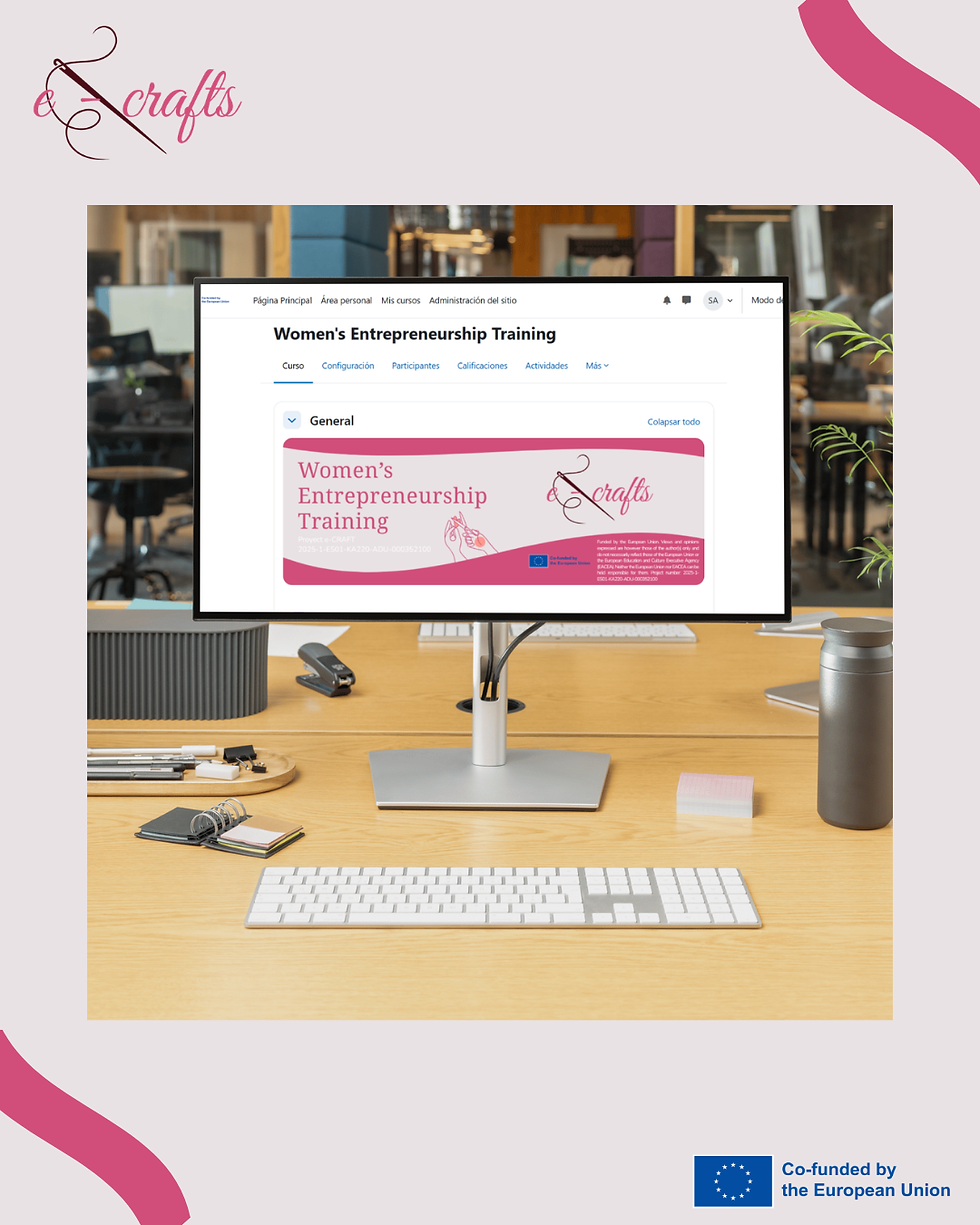
Over the past months, partners across Europe have been working together to design a training programme that responds to these challenges. The result is a Massive Open Online Course (MOOC) made up of 14 modules, covering topics such as digital entrepreneurship, branding, e-commerce, storytelling, financial literacy, and sustainability. Each module has been developed by partners with specific expertise, ensuring that the content is both practical and relevant to real-life needs. Now, the project is approaching an exciting milestone: the launch of its pilot phase, set to begin in the coming weeks.
Across all partner countries, women are currently being invited to take part in this new learning journey. Each organisation is in the process of recruiting at least five participants, bringing together a group of more than 35 women who will soon test the E-CRAFTS programme. For many of them, this will be more than just a course, it will be an opportunity to explore new possibilities for their future.
During the pilot phase, participants will not only learn new concepts but also apply them in practice. They will experiment with digital tools, improve how they present their products, explore online sales channels, and develop their own entrepreneurial ideas. Step by step, they will build the confidence needed to bring their creativity into the digital marketplace.
This kind of support is crucial. Across the European Union, only around half of women have basic digital skills, and women remain underrepresented in entrepreneurship. Without targeted initiatives, these gaps are likely to persist. By offering accessible, practical training, E-CRAFTS aims to contribute to changing this reality.
At the same time, the impact of this transformation goes beyond individual participants. Small businesses and independent creators form the backbone of local economies. When women are supported in growing their activities, the benefits extend to communities, cultural heritage, and the broader economy.
The upcoming pilot phase is therefore not just about testing a training programme, it is about understanding how real change happens. The feedback gathered from participants will help refine the modules, improve the learning experience, and ensure that the programme truly meets the needs of women in the craft sector.
As the E-CRAFTS journey continues, this moment marks a shift: from preparation to action, from ideas to real-world impact.
And most importantly, it marks the beginning of new opportunities, for women ready to take their skills, their creativity, and their ambitions into the digital world.
References
European Commission. (2022).
Women in Digital Scoreboard.OECD. (2019).
SME and Entrepreneurship Outlook.European Commission. (2023).
Erasmus+ Programme Guide.World Bank. (2020).
Women, Business and the Law.

Comments